“When you have millions of dollars, you have millions of friends.”
-Floyd Patterson
Although the most valued currency is the Kuwaiti Dinar, US dollar holds the place for the most used currency and continues to be the global reserve currency.
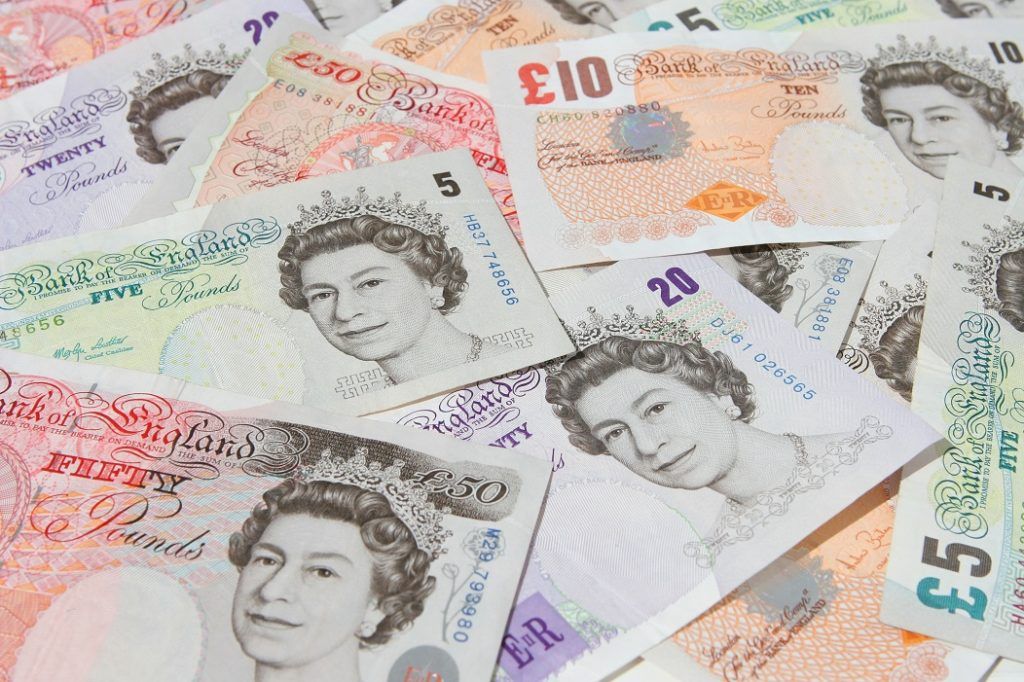
Paper currency first invented by the Tang Dynasty in China in the 7th century, declined the use of gold and silver coins as it was easy to trade using paper currency and very handy as well. Later on in the 13th century, Europe introduced their own paper currency, “Pound Sterling”. In those days, the currency was valued by the gold standard. It was a system where the value of the currency was pegged to the value of gold, ensuring that the value of a currency was stable and predictable.

The Pound Sterling had large gold reserves, which made its currency stable and enabled it to be widely used and the same happened. It became the global reserve currency for trade and currency. Its dominance lasted only till the World War-1. United Kingdom’s economy was in shambles. It had a massive debt of £7-8 million. Its gold reserves also depleted, and was forced to import resources from various countries. Meanwhile, The United States was emerging as a major economic power.
The Bretton Woods System
US and 34 other countries met at the Bretton Woods Conference in 1944 to establish a new international monetary order. As per the system, the value of US dollar was pegged at a rate of $35 per ounce. Additionally, the International Monetary Fund (IMF) and the World Bank was also a result of the conference. Countries additionally, agreed to maintain fixed exchange rates with US dollar.
The Marshall Plan- US dollar becomes a global reserve currency
US introduced the Marshall Plan in 1948, to rebuild Europe’s economies with $13.3 billion dollars as economic assistance.
The Bretton Woods System and the Marshall Plan turned successful in US’s aim to turn US dollars into a global reserve currency. It became the standard unit of exchange for international transactions and countries began to hold US dollars as a reserve asset.
Why Did Countries Trust US Dollars As A Global Reserve Currency?
Various reasons ensured the countries trust, which included: –
- Strong economy and stable government;
- Value pegged to gold, which provided a sense of stability;
- Various economic assistance provided to countries
In contrast to this, UK’s economic stability and gold reserves were low whereas its global acceptance was at an average. All of these reasons, enabled US dollars emerge as a widely accepted currency.
The Petrodollar- US Dollar to be used by oil-producing countries in oil trade
US made a deal with Saudi Arabia in 1948, where :-
- US would provide security and technical assistance in exchange for
- Saudi Arabia’s agreement to sell oil only in US dollars.
Since oil was widely used in those days for the extraction of various resources, this agreement turned to be a successful attempt in solidifying US dollar’s position as a global currency.
The Sudden Turmoil
As US faced a crisis in 1971, countries started losing confidence in US dollars and began exchanging dollars into gold to preserve the value of their currency. President Nixon issues Executive Order 11615 which suspended the convertibility of dollar to gold. The Nixon Shock marked the end of the Bretton Woods system and the beginning of a new era of floating exchange rates.
The Severe Impacts of Nixon Shock
- Decline in value of dollars
- Rise in inflation rate
- Shift to floating exchange rates
The Petrodollar System’s benefits
- Increased demand for US dollars
- Increased US influence
- Increased US military power and presence in the Middle East, which helped to protect its interest in the region.

Consequences and Sanctions Faced the Countries When They Challenge the Petrodollar System
Some of countries that have challenged the Petrodollar system include Iraq, Libya and Iran.
Consequences faced:-
- US military intervention
- Economic sanctions
- Loss of access to the global financial system
US Sanctions faced by the country include:-
- Loss of access to the global financial system
- Decline in foreign investment
- Inflation and economic instability
- Impact of Economic Sanctions
- Economic sanction
Measures taken by a country to restrict or prohibit trade with another country, with an aim of influencing the behavior of the targeted country or punishing it for its actions.
- Impact of Economic Sanctions on Country
- Increased inflation
- Higher oil prices
- Reduced economic growth
- Increased poverty and unemployment
Role of US Dollar in International Trade
Many countries use US Dollar as a reserve currency, hold US Dollar in their foreign exchange reserves and use them to settle international transactions.
Although countries like China and countries in the BRICS continue find alternatives to the US Dollar and take a step ahead in De-Dollarization, US dollar continues to be widely used and seems to remain the global reserve currency for the coming decades for its strong economy, gold reserves and strong influence in the trade world.
In a nutshell, US dollar not only emerged as a widely used currency but also proved that it can survive through crisis as worse as the Nixon Shock and much more. Not only that, its influence in the Middle-East turned out to be the key factor for its stable value and heavy influence in the resources sector.
Image Sources
https://cdn.corporatefinanceinstitute.com/assets/british-pound-1024×682.jpeg
:max_bytes(150000):strip_icc()/GettyImages-848755326-48dd2711646247648c4faebc98715119.jpg)